

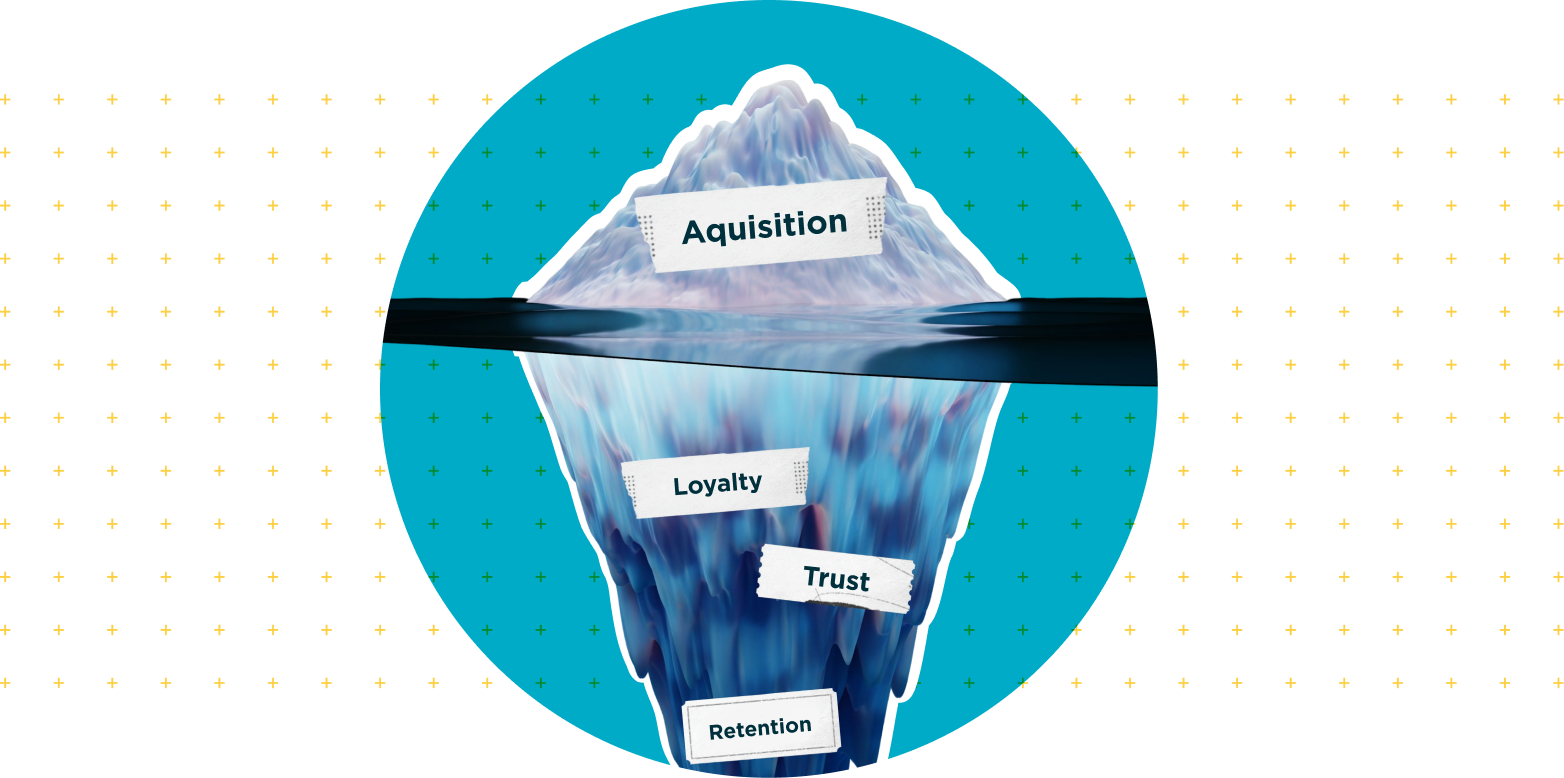
The growth story is still too narrow.
Most companies would never say retention does not matter. But many still operate as if acquisition is the main event and everything after the first conversion is secondary.
You see it in the way growth gets discussed. The attention goes to pipeline, conversion, customer counts, and acquisition cost. Those metrics matter. They are visible, immediate, and easier to report upward. But they can also create a view of growth that puts too much weight on the front end and not enough on what happens after the customer arrives.
That creates a real problem. Acquisition without retention isn’t just expensive. It’s a sign the business may be mistaking transactions for growth.
If customers leave quickly, disengage early, or never become more valuable over time, the company is not compounding growth. It’s paying to replace what it failed to keep.
The better question is not just how many customers a brand can acquire — it’s whether the experience after conversion gives those customers a reason to stay.
Retention starts long before churn.
One of the biggest mistakes companies make is treating retention like a post-sale issue. Too often, it gets handed off to CRM, loyalty, customer success, or service teams, as if it begins after the transaction is complete. But by then, much of the outcome has already been shaped.
Retention starts with the expectations a brand sets before someone buys. It’s shaped by the promises marketing makes, the ease of the buying journey, the clarity of onboarding, and how quickly customers see real value. By the time a company is reacting to churn, it’s often dealing with problems that started much earlier.
This is why customer experience must sit at the center of the growth conversation.
Customers do not experience acquisition, retention, loyalty, and lifetime value as separate stages. They experience one relationship. The ad creates the expectation. The website shapes the impression. The buying journey builds confidence or chips away at it. The product or service either delivers on the promise or does not. Every interaction after that affects whether trust deepens or weakens.
From the customer’s point of view, growth is not a funnel. It is a continuous experience.
Loyalty is earned from the experience.
That is also why loyalty cannot be treated as a messaging outcome. Loyalty isn’t the result of a brand saying it cares about customers. Instead, it’s earned when customers keep feeling they made the right choice.
It grows when the experience is useful, consistent, and worth returning to. It deepens when the brand delivers on what it promised, not just in the campaign, but in the actual relationship. Brand trust is shaped, tested, strengthened, or weakened through every interaction.
Lifetime value forces a better question.
When growth is judged mostly by acquisition metrics, marketing naturally optimizes for what shows up fastest: volume, speed, and efficiency. But cheap conversions do not always equal valuable customers. A strong quarter in acquisition does not always mean the business is getting stronger.
Lifetime value asks a sharper question: not just how efficiently was the customer acquired, but how valuable did that customer become?
That question changes the growth agenda. It puts more pressure on customer quality, not just customer volume. It brings onboarding, service, retention, loyalty, and experience design into the growth discussion where they belong. And it asks CMOs to look beyond whether they are creating transactions to whether they are building relationships that grow in value over time.
Customer experience may be the most important growth lever a company has. A better experience can increase repeat purchase, reduce churn, improve cross-sell and upsell, strengthen advocacy, and even make future acquisition more efficient by building trust before the next customer enters the funnel.
The job now is not simply to acquire customers more efficiently. It is to help build customer relationships that become more valuable over time.
Time to demand a bigger view of growth.
We need to push for a more connected view of the customer journey. Are we bringing in the right customers, or just the easiest ones to convert? Are we designing experiences that give them reasons to stay? Are acquisition and retention connected, or are they still managed in silos? Are we measuring the value of the relationship, or just the efficiency of the first transaction?
The best CMOs are widening the frame. They’re treating retention, loyalty, and lifetime value as proof that the brand is creating real customer value. And they’re recognizing that customer experience isn’t adjacent to growth. It’s what actually connects the whole story.
Because if growth stops at acquisition, it’s not really growth.
It’s only the beginning.