

Why this feels more urgent in 2026.
What changed isn’t just channel mix or measurement pressure. It’s the operating environment around marketing itself. Customers are discovering brands differently. AI-powered platforms are changing how people research products and services. Content is multiplying faster. Trust is more fragile. Decision cycles are shorter. In that environment, brand is not a soft layer that sits above performance. It’s part of whether performance works at all.
AI is also changing how brand and performance come together. The promise of more personalized, connected experiences means performance can no longer be defined only as efficient conversion. Increasingly, it‘s about delivering relevance at scale in ways that feel useful enough to strengthen the relationship, not just trigger the click.
Customers never cared about the distinction.
The wall between brand and performance is getting harder to defend because customers never experienced the distinction in the first place.
Customers don’t separate brand communication, performance media, content, search, product experience, and service into neat internal categories. They experience one company, one promise, and one stream of signals that either builds trust or chips away at it. A brand impression shapes whether a later message gets attention. A lower-funnel interaction shapes whether the brand feels credible. A poor product or service experience weakens everything that came before it.
The customer sees one journey. Only the internal org chart says otherwise.
That’s why companies that separate brand and performance too rigidly often create fragmented experiences for customers and circular debates for themselves.
The real risk isn’t imbalance; it’s disconnection.
Performance without brand can produce results for a while. But it usually gets more expensive, less distinctive, and harder to sustain. Brand without commercial discipline becomes harder to defend when pressure rises. Both problems become more exposed in a market where data, content, channels, and customer expectations are moving quickly.
The issue isn’t simply how much budget goes to brand or performance. It’s actually whether the organization can connect data, content, creativity, media, experience, and measurement well enough to make both reinforce each other.
That points to a leadership problem, not just a marketing one.
A modern model does not ask brand to live in one corner and performance in another. It starts with shared growth goals. It uses creative that can build memory and trust while still driving action. It treats AI as a way to scale relevance, not just output. It connects customer data to the full journey, so the experience feels coherent from first impression through post-purchase relationship. And it measures success in a way that recognizes both immediate outcomes and the conditions that make future growth easier.
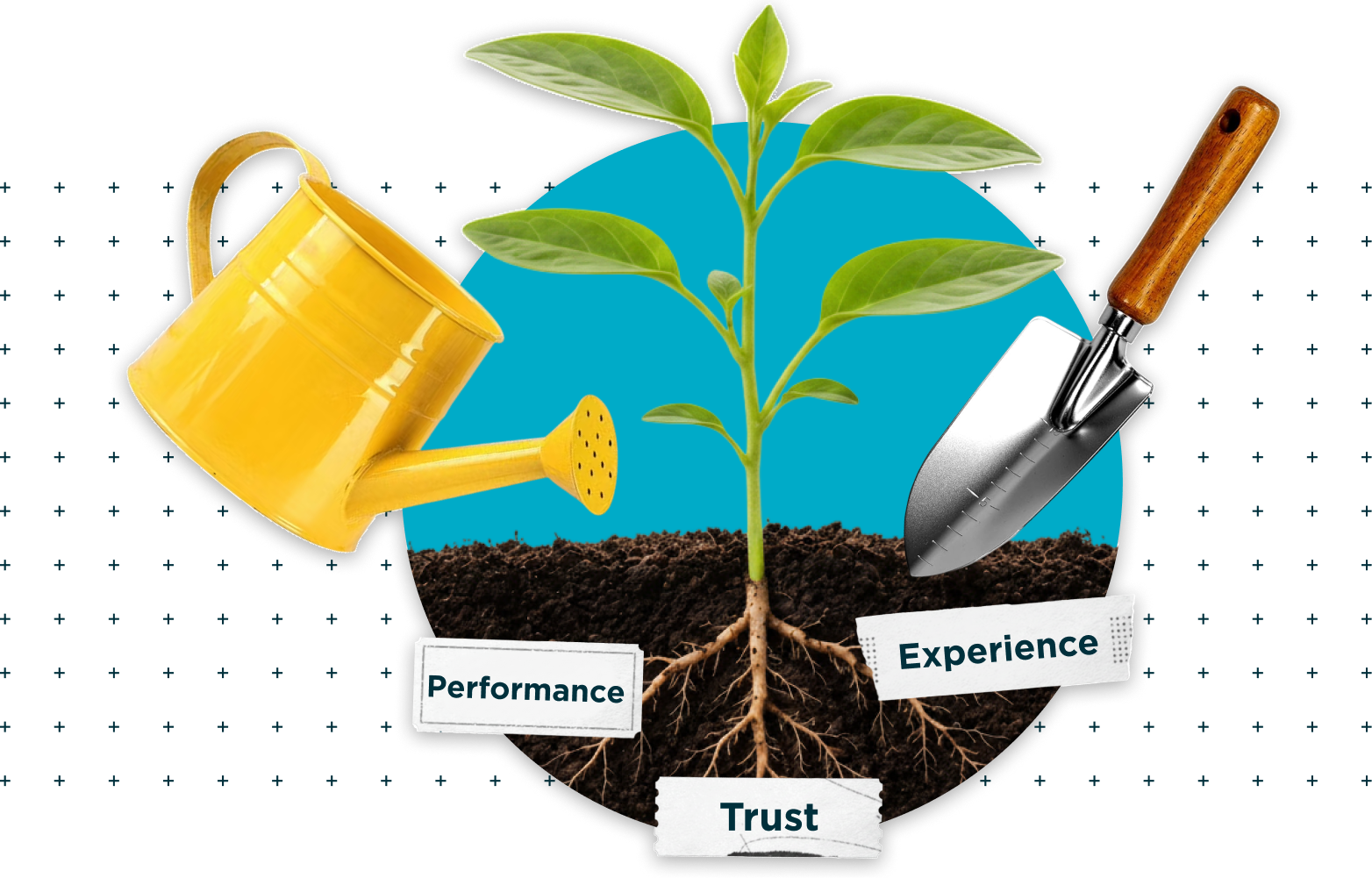
This is the real shift underway. The strongest CMOs cannot abandon accountability in favor of brand. They cannot abandon brand in favor of efficiency. They must design systems where trust, experience, and performance compound instead of compete.
End the debate. Build for what comes next.
A company still arguing brand versus performance in 2026 is probably arguing the wrong thing.
The real challenge now is building a marketing model that can earn trust, adapt to AI-shaped discovery, create relevance at scale, and still show measurable business impact. And it requires more than choosing a side. It requires a more connected view of growth itself.
CMOs are beginning to leave the old debate behind because the market already has. Growth doesn’t come from swinging back and forth between brand and performance.
It comes from finally making them work together as one.