

Value has to feel worth it.
Consumers are looking for ways to reduce spending. That does not automatically mean the cheapest option wins.
During the Fast Casual State of the Industry, Kelly Dykhuizen, VP, Customer Experience at Datassential, put it plainly: “Value doesn’t equal lowest price, it means bang for my buck.”
The word “bang” matters because its definition changes by guest.
For one person, it may come from a flavor they cannot find somewhere else. For another, it may be an offering that reminds them of their heritage. It may be a restaurant that creates space to connect with people they care about. Or a place where they can dine alone and find comfort in blending in.
Guests are weighing price. But they are also weighing convenience, craving, connection and whether the full visit feels worth it.
That makes value a bigger question than discounts and limited-time offers. Brands need to evaluate whether their full value proposition gives the guest a reason to choose the restaurant, and whether that reason is strong enough to bring them back.
Loyalty is more than a points program.
Points can support loyalty. They do not create the relationship on their own.
When it comes to bringing a guest back for multiple visits, changing behavior early matters. A first-time guest needs a reason to return.
And soon.
Time and again, I heard operators talk about communication immediately after the first order as a bridge to the second. The strongest messages did more than send another offer. They provided recognition. They felt like an invitation.
David Daniels, Chief Marketing & Digital Officer of Potbelly Sandwich Works, put a number behind the importance of that early return:
“If we can get a second trip in the first 30 days, our ability to get a third or fourth trip is five-fold.”
That makes the second visit more than another transaction. It becomes a chance to move the relationship forward before the initial interest cools.
Recognition can also do work that discounting cannot.
Stacy Fields, VP of Marketing for MOOYAH Burgers, Fries and Shakes, described how the brand’s segmentation helped a particular audience feel seen: “We create custom segment… [and] didn’t need to discount because this segment felt seen.”
A turkey-burger customer, a first-time trial guest and someone returning to a familiar favorite should not all receive the same message.
For fast-casual brands, the opportunity is to understand who came back and, more importantly, what gave them a reason to return.
AI should give people more time for people.
It will surprise no one that AI came up throughout the Summit.
There were practical uses. Cautionary tales. Questions about where AI can help and where the human standard still needs to be protected.
The underlying idea was simple: AI should give people more time for people.
Restaurants are using AI to aggregate guest feedback, identify location-specific issues, support training, manage reviews and reduce administrative drag.
Matt Armstrong, Co-Founder of Huey Magoo’s, described one practical application: “AI can aggregate guest feedback into one report, identify the top two or three issues and route them to the stores experiencing them most.”
But he also offered the caution: “Chasing AI too much takes us away from what actually matters: good food and good service.”
AI can save tedious hours. It can surface the information teams need more quickly. But people still have to make the decision, deliver the service and create the experience.
The question is not whether a restaurant can use AI.
It is whether that use helps the team spend more time on good food, good service and guests.
Growth needs a quit list.
One of the most practical sessions came from Kathie Niven, President and CEO of Biscuitville Fresh Southern.
She made the case for letting go of the parts of a business that only we think still need to be there. She framed the decision around one question:
Is this still earning its place?
Three places are worth examining:
- The menu item the kitchen prepares every day but no one orders, or the limited-time offer that slows the line.
- The format, daypart or footprint built for how guests used to order.
- The strategy written for a world that no longer exists.
Niven also offered a useful filter for deciding where the organization should invest its effort:
- Easy and commoditized: Table stakes. Do not overinvest.
- Easy differentiators: Scale them.
- Hard and commoditized: A no-go zone.
- Hard differentiators: Potentially worth protecting, but harder to scale.
For fast-casual brands, the growth question is not only what to add next.
It is what to stop doing so the things that make the brand distinct have room to work.
Four ideas to carry forward
The time in Arlington was well spent because operators were candid about what’s working, what’s not and what they are still trying to refine.
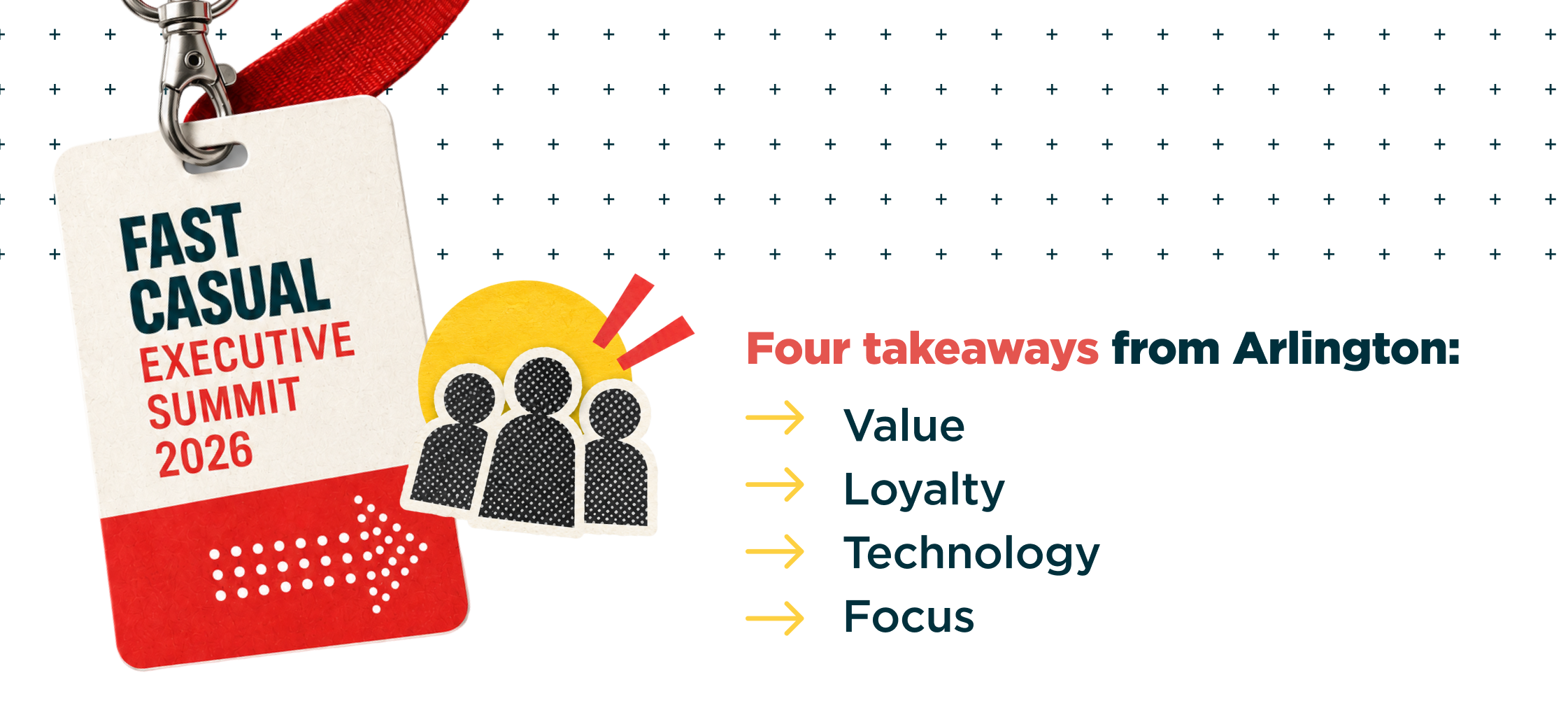
Four ideas are worth carrying forward:
- Value creates a reason to choose the restaurant.
- Loyalty creates a reason to return.
- Better technology and stronger teams make the experience worth repeating.
- Focus makes room for what makes a brand distinct.
The brands best positioned for growth will connect all four rather than treat them as separate initiatives.
Because the next visit is rarely earned by one tactic.
It is earned by the way the whole experience holds together.