How a “failed” AI Shopping assignment turned into a crystal ball.
At Bernstein-Rein, we believe retail intelligence comes from consumer insights, a true brand purpose, and half a century of unrivaled experience. We put these beliefs together to accelerate growth. This approach is called Retailigent™ – it's what drives our work every day.

On Monday, we had three of the BR fam, representing different departments across the agency, present their findings from a challenge we tasked them with in early December: Purchase a physical product using only AI. No navigating to Amazon.com, no Googling for a retailer. Just ask Gemini, ChatGPT, or Perplexity to "find a long-lasting chew toy" or the "perfect gift for a horse nurse.”
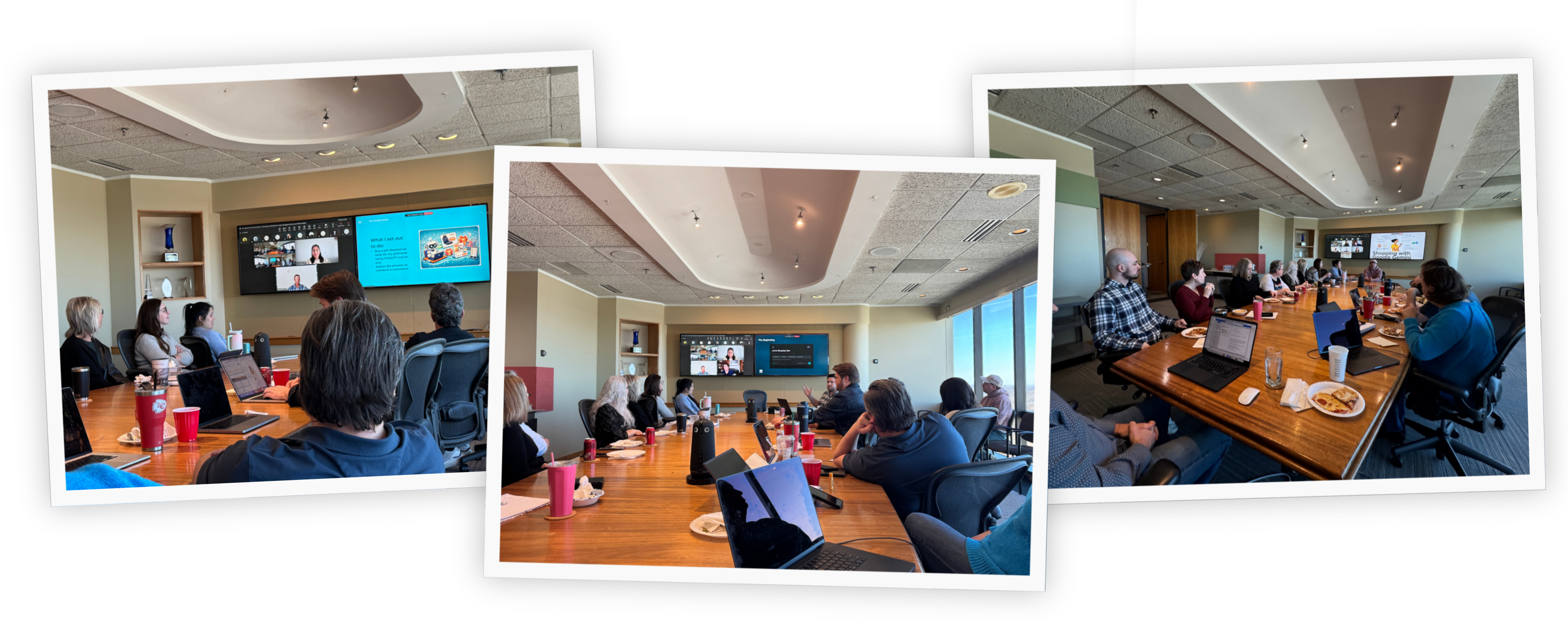
The verdict? It was difficult at best. For the AI skeptics, there may need to be some damage control. For the AI enthusiasts, they see this is all par for the course.
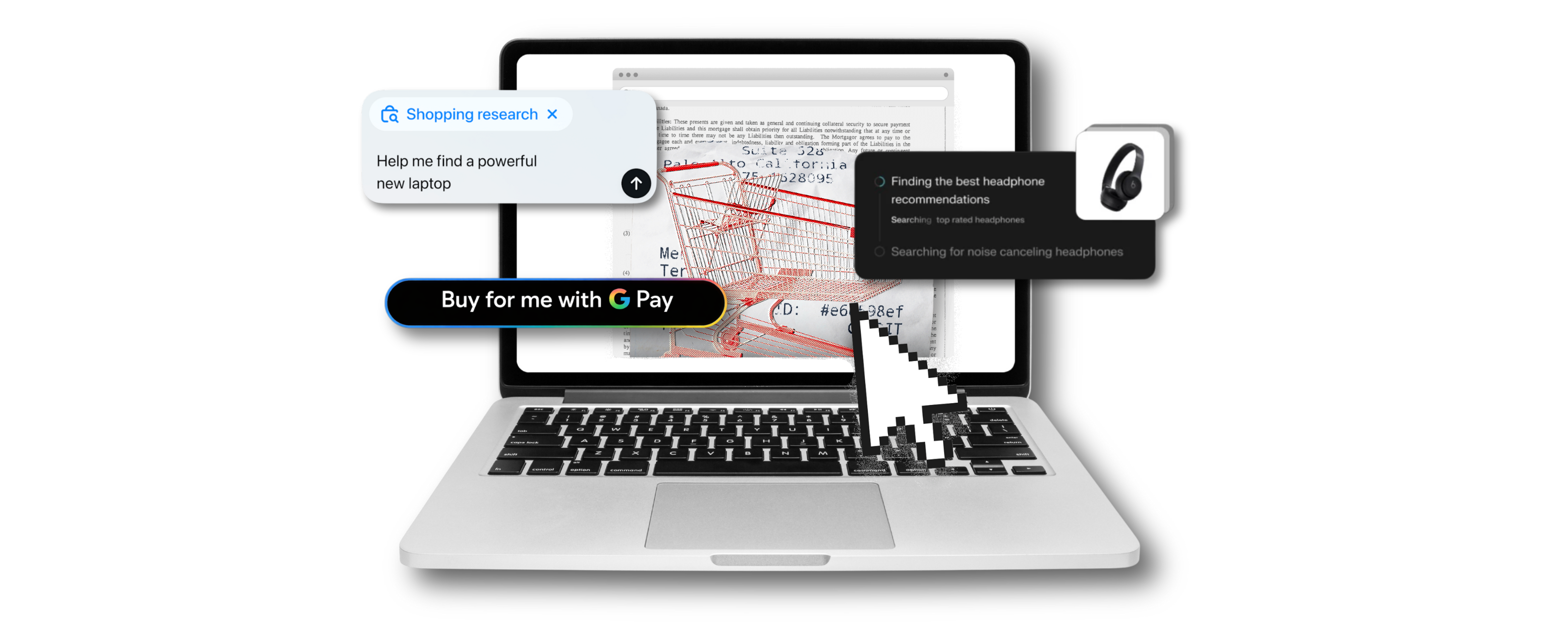
Our tributes hit dead ends. They faced “hallucinations” where AI recommended products that were either out of stock or completely fake. Got stuck in loops where the chatbot could find the item but couldn't transact. One team member, trying to buy a heated car seat cushion, eventually gave up and let the AI buy a horse mug instead—simply because it was the only item the system could actually process.
If you looked at our experiment in a vacuum, you might think AI commerce is years away. But if you look at what just happened at the Consumer Electronic Show 2026 (CES) and is currently happening at Retail’s Big Show 2026 hosted by the National Retail Federation (NRF), you realize that the clunky experience our team had is exactly what the industry is furiously fixing right now.
In 2025, we heard agencies speaking to how they’re “experimenting” with AI, evaluating various tools and platforms, taking a stab at governance policies and really understanding what could be done. We’re past that. In 2026, it’s about outcomes. More specifically, outcomes that lead to bottom line impacts. While 2026 is the Year of the Horse, it’s also the year of exiting the Experimental Phase and entering the Outcomes Era.
Yes, the BR team had frustrations with shopping experiences that took them exponentially longer in AI than in more common place platforms like Amazon or any retail ecommerce site, but those frustrations proved to be spoiler alerts for the innovation being introduced at two of the nation’s largest industry shows – CES 2026 and NRF 2026. Here’s how what they experienced came face to face with the new frontier of AI this past week.
The biggest friction the team faced was that the AI could talk but it struggled to do. Each person had to vet every option themselves, applying rigor to the searches with several rounds of back-and-forth refinement that they may not have encountered using a more popular platform like Amazon. The purchase process was especially tedious, if it was actually able to be executed at all.
Enter one of the most popular buzzwords of 2026 industry shows. Agentic AI. Here we see autonomous assistants that can execute entire tasks without constant human handholding. Something our team doled out regularly throughout this assignment. Agentic AI is moving us forward leaps and bounds by removing the dull and drag from mundane and tedious tasks that can be automated.
We are already seeing this scale in media buying. At CES, NBCUniversal and agency RPA demonstrated a system where AI agents negotiated and optimized a live sports ad buy across linear and digital TV in second. Something that usually takes weeks of manual emails.
Why did our team hit so many walls? Because the data pipes weren't connected. The AI didn't know real-time inventory, leading to "hallucinations" about products that didn't exist or couldn't be bought.
Call it serendipity. Call it fate. We call it amazing timing. The exact problem our team encountered when trying to complete their transactions was addressed at NRF in New York just this week (likely at the same time our team was presenting their findings – at least, we like to tell the story that way).
Regardless of the exact moment in time, the good news is Walmart and Google announced a massive partnership to integrate Walmart's inventory directly into Gemini. But wait there’s more. The real news isn't just the partnership. The rock your world news lies in the Universal Commerce Protocol (UCP).
What is a Universal Commerce Protocol, you ask. UCP, as the cool kids call it, is a new open standard that allows an AI agent to read a retailer's catalog, check stock, and process payments without leaving the chat window.
So, what does this really mean?
• For the Shopper: It solves the transaction friction our team experienced. Gemini can now verify a product is in stock before recommending it, so you don't end up settling for a horse mug. I mean. Unless, you really want the horse mug. (By the way, she got the heated car seat, too.)
• For the Retailer: It allows them to capture intent at the moment of discovery, rather than waiting for you to search for keywords on their site or visit your site altogether. The retailer is getting in on the action even before the shopper is even aware of what it is they’re trying to purchase.
Which leads to our next finding.
Maybe it was because our participants already had an idea of what they wanted to purchase, and weren’t tasked as much with the discovery and inspiration part of the buying journey. But the BR team all jumped in with pretty tight keywords of what they were looking to buy.
In a more organic AI shopping journey (real world vs academic structure), the shopper is typically in a mode of discovery, research and inspiration. They have a need, but aren’t quite sure what will fulfill it.
Walmart’s leadership is preparing for this shift while hedging their bets. Their agnostic platform approach where they plan to continue working with OpenAI on their Sparky platform, while rolling out this integration with Google, allows them to attract shoppers both ways. Through search and through need state. Though, the leadership team is doubling down on need state, going so far as to say, “Search is being replaced by Intent.”
Not quite tracking, let us show you a quick example:
• Old Way - Search: Search for "party supplies."
• New Way - Intent: Tell the AI, "I'm planning a graduation party for 20 people on a budget."
At BR, we’re predicting this will shift the paradigm on the purchase journey we’ve all used to build customer touchpoints, moving shoppers through the funnel from awareness to consideration to purchase. With shoppers focused on finding solutions to their needs, perhaps unaware of what that solution even is, we as marketers must focus on reaching them and connecting them to our brands way before awareness even begins. We have to find ways to connect with consumers throughout their research, discovery, and inspiration exploration.
BR’s team uncovered that while the interface for AI shopping is here, the transaction isn’t ringing any registers in a compelling way. But the future is here. CES and NRF brought forward many exciting and potential solves.
The Outcomes Era isn't wait and see. It’s about creation, production, and hanging onto the tiger by its tail with all you’ve got. The plumbing is being laid right now. The question is: is your brand ready to flow through it?